
Business & commercial
Solar for farms: irrigation, dairies and cold storage
How solar and batteries suit pumping, milking and cold rooms, what finance and incentives exist, and what to sort out first on a rural property.

Commercial solar · Farms
The short answer
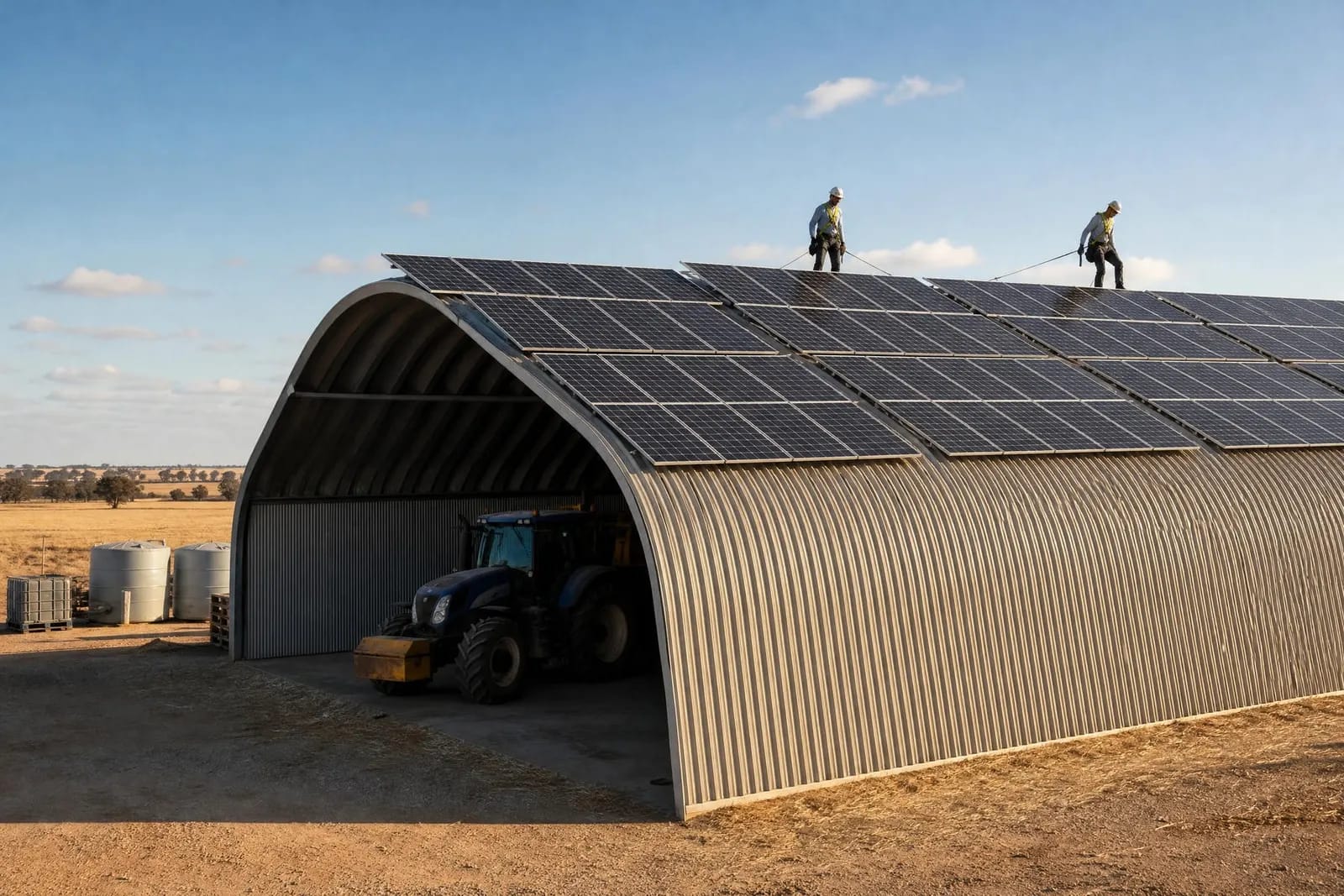
Farms do not have one load profile. A dairy runs around milking times, typically early morning and afternoon, with milk cooling and hot water in between. A cropping or horticulture property may have almost nothing running for months and then irrigation pumps running for long hours in summer. A packing shed or cold store runs refrigeration all day and night. A machinery shed and workshop may only draw power in bursts.
Solar output peaks in the middle of the day and in summer. That lines up well with irrigation and with cooling loads, which work hardest on hot days. It lines up poorly with a milking at 5am and 4pm, or with a pump that runs on a cheap off-peak tariff overnight. Whatever is running when the sun is up is what your solar actually offsets.
Weekends make little difference to a farm, because most farms work seven days. That helps: unlike an office, the load does not fall away on Saturday and Sunday. The real swing is across seasons, so ask your installer to size the system from a full year of interval data, not a single summer bill.
Australia
Systems up to 100 kW get small-scale technology certificates (STCs) for the years left until the scheme ends in 2030. Mid-scale systems (100 kW to 1 MW) installed from 1 October 2026 can claim STCs with a fixed 5-year deeming period; the Clean Energy Regulator said applications would not open until mid to late November 2026. Choosing STCs for a mid-scale system means no REGO certificates during the deeming period.
Official detailsNSW
From 1 September 2026, non-residential sites in NSW installing a 20 kWh to 30 MWh battery can get an upfront discount in the installer’s quote: indicatively about 30 to 40 per cent with new or additional solar (installed within 90 days either side), or about 20 to 30 per cent for a battery alone. Batteries of 20 to 200 kWh need a minimum payment. Sign the installer’s nomination form before work starts. Data centres and off-grid sites are excluded. It can be combined with the federal programs if you meet both sets of rules.
Official detailsQueensland
For primary producers and commercial wild-catch fishers with an existing Queensland primary production business. Loans are up to $1.3 million each, secured (usually by mortgage), and eligible uses include solar, refrigeration systems, lighting and pumps. Batteries are not mentioned. QRIDA lists $120 million of lending for 2026-27 and says applications are assessed up to 30 June 2027 or until lending is committed.
Official detailsVictoria
An upfront incentive, in Victorian energy efficiency certificates created by an accredited person, for 30 to 200 kW solar at grid-connected non-residential premises. It is not available at apartment buildings. It can sit alongside STCs. Systems above 200 kW are not eligible under this activity.
Official detailsAustralia
Households and businesses can get STCs for a new battery of 5 to 100 kWh installed with solar of up to 1 MW, but STCs count only the first 50 kWh and taper above 14 kWh. The battery must be on the Clean Energy Council list, installed by an accredited installer with a battery endorsement, and capable of joining a virtual power plant. The per-kWh factor falls in steps: 6.8 until December 2026, then 5.7 from January 2027.
Official detailsAustralia
From 1 July 2026, small businesses with aggregated turnover under $10 million can deduct the full cost of an eligible asset costing under $20,000 in the year it is first used or installed ready for use. Larger systems can go in the small business pool. This is general information: ask your accountant how it applies to you.
Official detailsThis is an estimate from the Solar Retailers commercial solar calculator, not a quote. Real prices, STC values, usage patterns and connection costs differ, and it leaves out inverter replacement.
Business & commercial
How solar and batteries suit pumping, milking and cold rooms, what finance and incentives exist, and what to sort out first on a rural property.

Business & commercial
From 1 October 2026, commercial solar systems between 100 kW and 1 MW can claim STCs. Who qualifies, how the 5-year deeming works, and what to keep.

Business & commercial
How the federal battery discount and NSW business battery discount work for businesses, how to size a battery from interval data, and when one pays off.

Business & commercial
How commercial solar gets approved by your electricity network: kVA vs kW, export limits, zero export, protection, fees and why approval comes before install.

Business & commercial
How to pay for commercial solar: cash, hire purchase, chattel mortgage, lease or solar PPA. What each means, who owns the system, and what to ask a provider.
Checked 31 October 2026. This page is general information, not financial, tax or legal advice. Rules, rebates and prices change, so check the sources before you decide.
Run your own figures first, then ask at least three accredited installers to quote on the same brief. Quotes are free and you’re under no obligation.
Loading…